News
Moiva takes part in Finnish Institute of Occupational Health study – results are significant for the care sector


Written by
Moiva
Published on
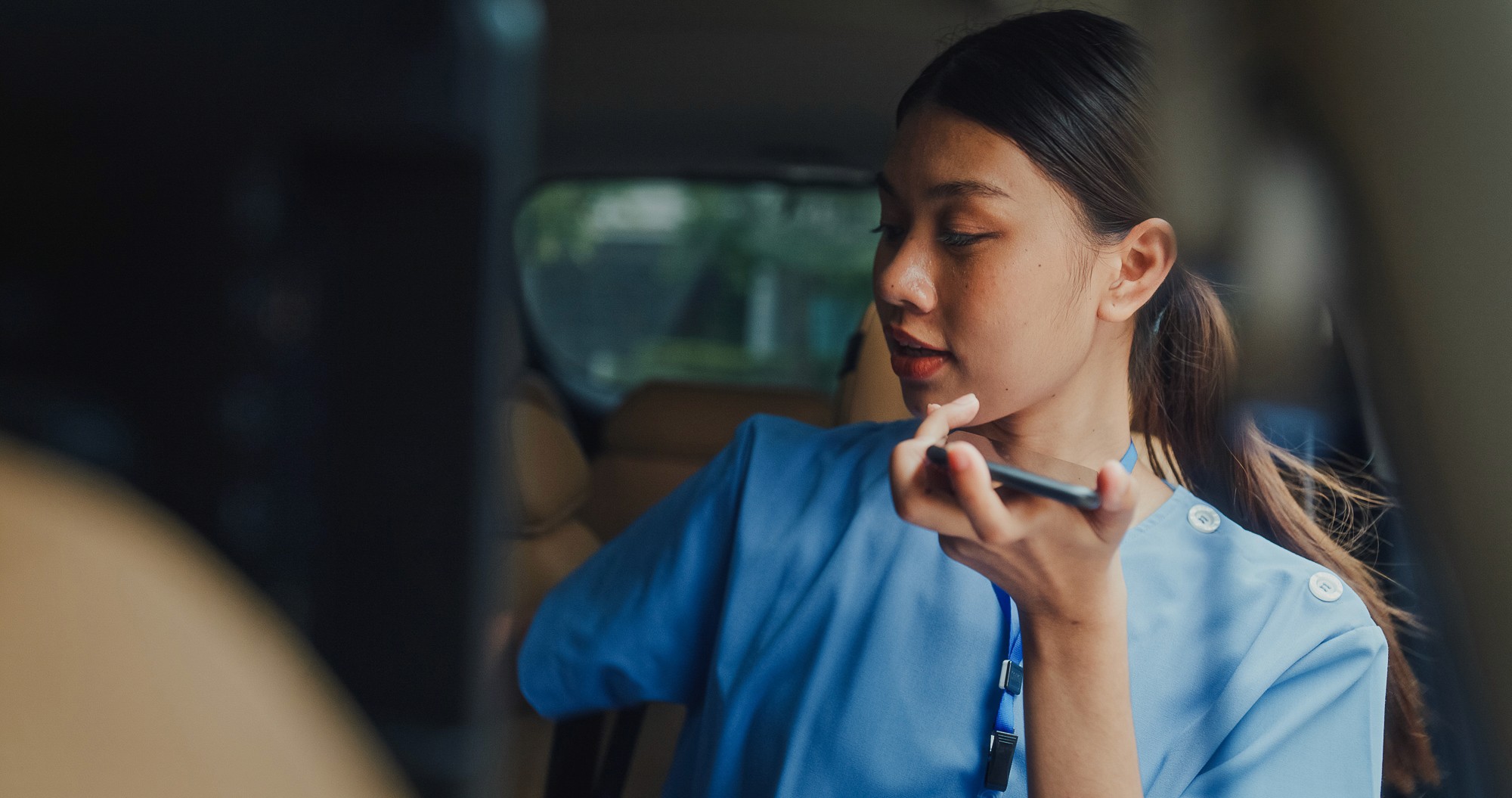
In the Finnish Institute of Occupational Health's AI Solutions in Care study, switching to Moiva's AI-assisted voice documentation reduced the time spent on client documentation in Attendo's care homes from 45 minutes to 21 minutes per shift. The study shows that AI's benefits in care don't come from the technology alone. The solution has to fit the everyday reality of care work and support the professional's own judgment.
The research and development project, run by the Finnish Institute of Occupational Health and Attendo, looked at how Moiva's AI-assisted voice documentation was adopted and used in three Attendo care homes between 2025 and 2026. It examined how the solution affects workflow, workload, control over one's own work, and the ability to focus on core care tasks, as well as what successful adoption requires from staff, management, and the organization.
Documentation spread differently across the workday
Time savings weren't the study's only finding. Voice documentation also changed the rhythm of documentation itself. Entries used to pile up toward the end of a shift. With mobile voice documentation, caregivers could log entries closer to the care situation itself, spread more evenly across the shift.
In interviews, caregivers said that being able to log events while they were still fresh cut down on having to hold details in mind, recall them later, or rely on notes. In morning shifts especially, spreading documentation across the day could free up time toward the end of the shift, for example for spending time with residents or for activities.
"Results show that AI-assisted voice documentation can reduce the time spent on documentation and change how it fits into the workday. What matters, though, is that the technology is fitted to real work practices. The benefits come when technology supports the professional's work, and when employees themselves are involved in how it's used," says Teppo Valtonen, Development Manager at the Finnish Institute of Occupational Health.
AI doesn't remove the need for professional judgment
The study's qualitative findings show that AI-assisted documentation doesn't just speed up the work, it changes the nature of it. Instead of writing, the work now includes speaking, and reading, assessing, and, when needed, correcting the text the AI produces. Responsibility for the accuracy of the entry stays with the caregiver.
How and where voice documentation happens depends on the situation. Not every care situation suits real-time voice documentation. In sensitive or intimate moments, for example, the entry can be made afterward, somewhere quieter. In other situations, it can be done together with the resident.
"Beyond the concrete time savings, what's interesting about this study is what the results say about how AI is used in real care work. The benefit doesn't come simply from bringing new technology into the workplace. The solution has to fit the everyday reality of the job, and the professional has to keep the judgment call on how and when it's used," says Sami Sipiläinen, Moiva's Chief Customer Officer.
Technology has to adapt to care work
The study points out that successful use of AI in care takes more than working technology. It also needs ways of using it that fit real work practices, enough support, and staff involvement. Technical glitches, checking AI-generated text, and situations where voice documentation isn't a good fit can also add to the workload.
"There's a lot of promise talked about around AI. What matters to us is being able to show its value in real care work. What's important in this study isn't just that documentation time fell, but that the quality of documentation held up, and that the study makes visible what successful adoption actually requires. Time savings matter, but they're a means. The goal is better care," says Moiva CEO Tero Salminen.
Moiva's starting point for development is simple: technology needs to adapt to care work, not care workers to technology. AI-assisted voice documentation solves one concrete problem, but it also changes how the information care work generates can be produced as part of the daily job.
The study combined system data with caregivers' experiences
The AI Solutions in Care study combined data from the voice documentation system, an assessment of time spent on documentation, observational interviews, in-depth interviews, and a review of international literature. Its central conclusion: AI's potential in care lies, above all, in supporting professionals' work. Realizing the benefits takes working technology, usage patterns that fit real practice, enough support, and giving staff a genuine chance to take part in development.
The study was carried out by the Finnish Institute of Occupational Health, funded by the Finnish Work Environment Fund. It took place in three Attendo care homes.
Moiva builds technology made specifically for care
Moiva was developed during the research project at Efima. Efima was responsible for delivering the voice documentation solution in the project, provided technology-related expert support, and helped build staff competence. In early September, Moiva began operating as an independent care technology company under Better Care Technologies Oy.
AI-assisted voice documentation is Moiva's best-known use case, but Moiva is building a broader AI and data platform for care. This study brings independent evidence of the impact of one of Moiva's key use cases in a real care setting. Moiva's technology for care has been mentioned in TEHY, TTT Magazine – Special Magazine of Workplace Welfare and Etelä-Suomen Sanomat.
More information
Moiva, CEO Tero Salminen
tero.salminen@moivacare.com, +358 40 767 5311
About Moiva
Moiva is a Finnish care technology company that builds an AI and data platform for better care. Moiva helps care professionals and organizations make better use of data in their daily work, in developing care, and in managing it. Moiva is a brand of Better Care Technologies Oy.
Related articles